20th Anniversary: Chelina Odbert + Joe Mulligan
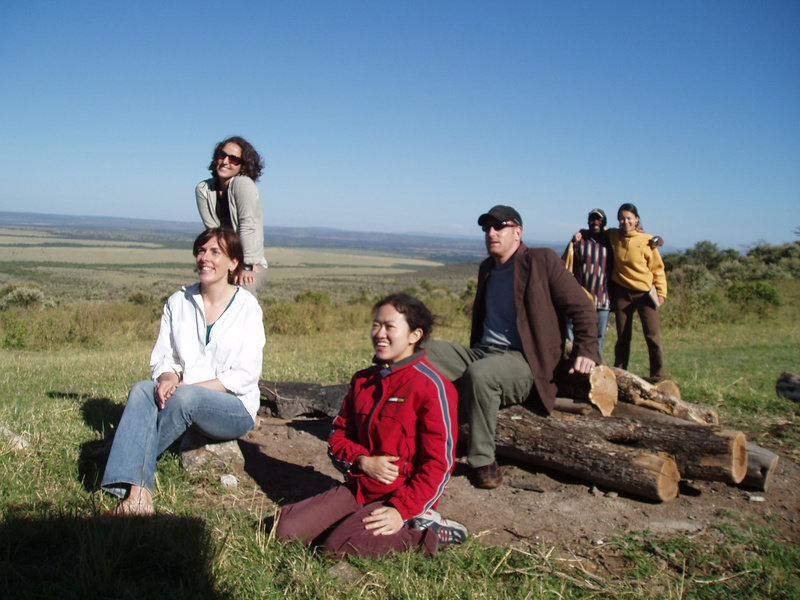
In 2006, six students at Harvard’s Graduate School of Design—Chelina Odbert, Arthur Adeya, Kotchakorn Voraakhom, Jen Toy, Patrick Curran, and Ellen Schneider1—applied for a grant to spend two weeks in Nairobi with residents of an informal settlement called Kibera. Through this trip, Kounkuey Design Initiative (KDI) was born.
Two decades later, KDI is an established global nonprofit employing ## people—an assemblage of landscape architects, planners, engineers, community organizers, artists, and researchers—working between two continents to develop transformative public space projects, influence policy, and bring grassroots planning, advocacy, and design to communities facing generational disinvestment and residents on the front lines of the climate crisis.
All of it stems from that first summer in Kibera. Despite varied backgrounds, the cohort shared two interwoven observations about the state of practice. First, that because traditional design firms rely on institutions, agencies, and organizations able to commission them, places and people with the greatest need often have the least access to professional design as a tool for collaboration and advocacy. Second, that the prevailing model for international development aid—to parachute in, inject funding without context, and vanish—had profoundly failed the communities it aimed to benefit. The same extractive dynamic, as they saw it, had direct parallels in the design and planning world they were about to enter.
In Kibera, two questions arose. What if, instead of imposing expertise or analysis, the designers simply listened to what residents needed and started from there? And what if they stayed?
All of it stems from that first summer in Kibera. Despite varied backgrounds, the cohort shared two interwoven observations about the state of practice. First, that because traditional design firms rely on institutions, agencies, and organizations able to commission them, places and people with the greatest need often have the least access to professional design as a tool for collaboration and advocacy. Second, that the prevailing model for international development aid—to parachute in, inject funding without context, and vanish—had profoundly failed the communities it aimed to benefit. The same extractive dynamic, as they saw it, had direct parallels in the design and planning world they were about to enter.
In Kibera, two questions arose. What if, instead of imposing expertise or analysis, the designers simply listened to what residents needed and started from there? And what if they stayed?
I. Origins / “What if we stuck around?”
Chelina, take us back to the first trip to Nairobi. How did you encounter each other as students?
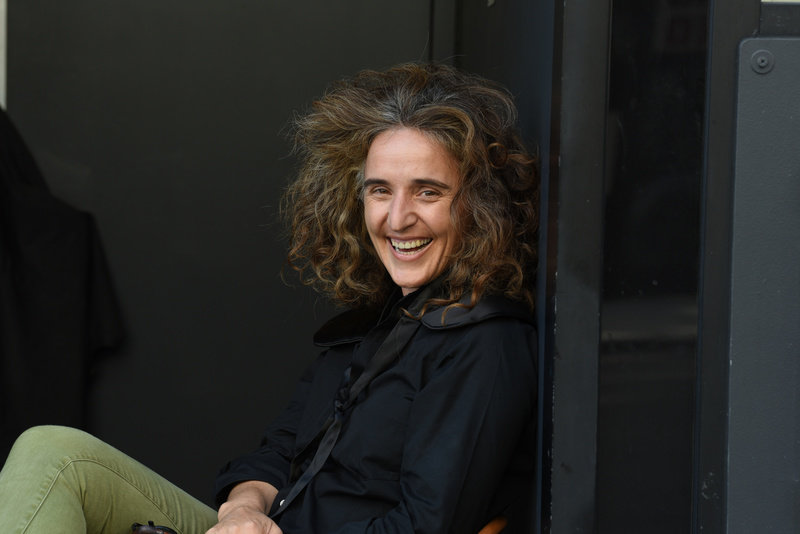
Chelina Odbert: At school, we were all hoping to use design in a more socially-minded way, looking for like-minded people, coursework, and ways to practice differently. Some of us were already friends, others friends of friends. The idea for the trip came in response to the Penny White Project Fund, an annual research grant. We chose to focus on Kenya because Arthur had grown up in Nairobi and knew a community organizer who agreed to walk us around Kibera, the continent’s largest informal settlement. He knew it would be a challenging place to tackle our core question of how to do a community-driven design project, but it also meant free lodging and a lot of other built-in conveniences, so we ended up convincing him to go.
Our original goal was to run a few workshops on potential responses to environmental degradation in the settlement and larger questions of rural-to-urban migration. All we knew at the time was that if we were going to do anything useful, it had to happen through a participatory process. As we walked around, we talked to people—people our guide knew and strangers as well—and invited them to a conversation at someone’s family compound. Then we confronted something we should have foreseen: of course, residents weren’t jumping at the opportunity to spend a week talking to a random group of students from far away. The feedback was: “You’re not the first people to come here, and you’re not going to be the last. If you want to talk to us, you need to structure this differently.”
Many of our most profound lessons about engagement came from that trip—how to set expectations, not just for others, but for ourselves. We didn’t have the resources to compensate people for their time, but knew that had to become part of the process. The first workshop started with a small group, mostly women, then expanded to a youth group. We discovered much of the resident organizing we were hoping to do already existed on a smaller scale. That became a lesson, too: to work with existing networks and relationships. If you build trust with one person, then, in the best circumstances, that trust can be extended. Kotch gave us the name: in Thai, kounkuey means “to get to know something well,” which is what we were trying to do.
Joe, when did you first encounter KDI?
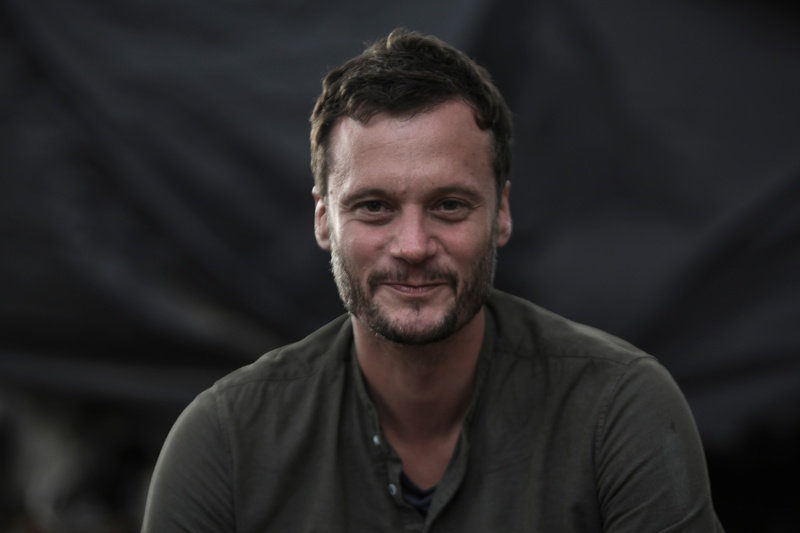
Joe Mulligan: It was late 2007. Jen and Chelina had traveled to New York for a residency with Van Alen, hoping to extend their research. They were looking for engineering input—many of the issues they encountered that first summer in Kibera involved water, sanitation, and flood control. At one of the Van Alen dinners, I was doodling a decentralized sanitation system on a napkin. They found that interesting and we got to talking.
Up to that point, my career had involved a lot of top-down real estate-driven projects across Southeast Asia, Africa, and the U.S., often new megacities designed by prominent Western architects. I also had a background in humanitarian practice and had traveled to El Salvador after Hurricane Mitch and worked in northeastern Nigeria for a year on rural roads. When I met Chelina, Jen, Arthur, and Ibra, I felt like KDI was a place to resolve questions I had about how to practice in a more grounded way.
When did you know the project would grow and what was the fuel for that first decade?
Chelina: Residents told us that if we wanted to be different, we had to show up again. We took that challenge seriously and literally. Four of the six founders graduated after the first trip, but Jen and I still had a year of school left, so we decided to go back. We used the year to put our tools together, enrolling in an intro to engineering course at MIT and a social enterprise incubator at Harvard’s Kennedy School, where a business school alum helped fund our second trip. They’re still on the KDI Board today.
By 2007, we still hadn’t built anything. At Van Alen, we were trying to figure out how to get our first project in Kibera done, bridging the gaps in our own expertise with development economists and engineers. That first project—and the whole idea of Productive Public Spaces4—came from the realization that to get anything done, we needed to supplement our own design skills with economic and engineering perspectives.
The founding story is complicated because we all had to get other jobs at the beginning. Joe came along, we completed the first site, and somehow thought we’d be able to continue in a strained, remote way, which would never work. There came a point, with the second site, where we either had to stop and say, “We did two good things,” and give up the side hustle. Or we could acknowledge that someone had to take a leap and commit to the work full-time. I was willing to quit my job, and we had some board members and funders who were invested in us continuing.
Joe insisted we apply for the ReSource Award from the Swiss Re Foundation, which focused on sustainable watershed management and came with additional funding. It was very much an engineering award, which I didn’t have the language for—but Joe did, and the forces aligned. If we won, it meant someone would need to be in Kenya full-time. I was shocked when Joe said, “Well, I could do it.”
Joe: There was a brilliant and important idea at the heart of KDI’s thesis: the idea of building up smaller acts of urban acupuncture across social and ecological networks to produce larger impact. I wanted to think about infrastructure at a bigger scale, but to do it from the ground up, from a foundation of deep relationships. At every stage of the first three projects in Kibera, there was blood, sweat, and tears shed. Very real blood, sweat, and tears. I felt we had achieved something and showed our scale-jumping thesis could be real. That was the fuel.
Chelina: For different reasons, each of the founders have our own origin story. I can’t speak for others, but if there’s something like a calling in life, mine has always been to try and do the thing that needs doing and isn’t being done. The question comes up a lot: what keeps you going through the hard times? To me, the hard times are the reason I’m there. If it ever became easy, that would be great for the issues we’re working on, but it would also signal that something else hard needs doing. I always say that, to work at KDI, you have to be comfortable with the struggle.
Chelina Odbert: At school, we were all hoping to use design in a more socially-minded way, looking for like-minded people, coursework, and ways to practice differently. Some of us were already friends, others friends of friends. The idea for the trip came in response to the Penny White Project Fund, an annual research grant. We chose to focus on Kenya because Arthur had grown up in Nairobi and knew a community organizer who agreed to walk us around Kibera, the continent’s largest informal settlement. He knew it would be a challenging place to tackle our core question of how to do a community-driven design project, but it also meant free lodging and a lot of other built-in conveniences, so we ended up convincing him to go.
Our original goal was to run a few workshops on potential responses to environmental degradation in the settlement and larger questions of rural-to-urban migration. All we knew at the time was that if we were going to do anything useful, it had to happen through a participatory process. As we walked around, we talked to people—people our guide knew and strangers as well—and invited them to a conversation at someone’s family compound. Then we confronted something we should have foreseen: of course, residents weren’t jumping at the opportunity to spend a week talking to a random group of students from far away. The feedback was: “You’re not the first people to come here, and you’re not going to be the last. If you want to talk to us, you need to structure this differently.”
Many of our most profound lessons about engagement came from that trip—how to set expectations, not just for others, but for ourselves. We didn’t have the resources to compensate people for their time, but knew that had to become part of the process. The first workshop started with a small group, mostly women, then expanded to a youth group. We discovered much of the resident organizing we were hoping to do already existed on a smaller scale. That became a lesson, too: to work with existing networks and relationships. If you build trust with one person, then, in the best circumstances, that trust can be extended. Kotch gave us the name: in Thai, kounkuey means “to get to know something well,” which is what we were trying to do.
Joe, when did you first encounter KDI?
Joe Mulligan: It was late 2007. Jen and Chelina had traveled to New York for a residency with Van Alen, hoping to extend their research. They were looking for engineering input—many of the issues they encountered that first summer in Kibera involved water, sanitation, and flood control. At one of the Van Alen dinners, I was doodling a decentralized sanitation system on a napkin. They found that interesting and we got to talking.
Up to that point, my career had involved a lot of top-down real estate-driven projects across Southeast Asia, Africa, and the U.S., often new megacities designed by prominent Western architects. I also had a background in humanitarian practice and had traveled to El Salvador after Hurricane Mitch and worked in northeastern Nigeria for a year on rural roads. When I met Chelina, Jen, Arthur, and Ibra, I felt like KDI was a place to resolve questions I had about how to practice in a more grounded way.
When did you know the project would grow and what was the fuel for that first decade?
Chelina: Residents told us that if we wanted to be different, we had to show up again. We took that challenge seriously and literally. Four of the six founders graduated after the first trip, but Jen and I still had a year of school left, so we decided to go back. We used the year to put our tools together, enrolling in an intro to engineering course at MIT and a social enterprise incubator at Harvard’s Kennedy School, where a business school alum helped fund our second trip. They’re still on the KDI Board today.
By 2007, we still hadn’t built anything. At Van Alen, we were trying to figure out how to get our first project in Kibera done, bridging the gaps in our own expertise with development economists and engineers. That first project—and the whole idea of Productive Public Spaces4—came from the realization that to get anything done, we needed to supplement our own design skills with economic and engineering perspectives.
The founding story is complicated because we all had to get other jobs at the beginning. Joe came along, we completed the first site, and somehow thought we’d be able to continue in a strained, remote way, which would never work. There came a point, with the second site, where we either had to stop and say, “We did two good things,” and give up the side hustle. Or we could acknowledge that someone had to take a leap and commit to the work full-time. I was willing to quit my job, and we had some board members and funders who were invested in us continuing.
Joe insisted we apply for the ReSource Award from the Swiss Re Foundation, which focused on sustainable watershed management and came with additional funding. It was very much an engineering award, which I didn’t have the language for—but Joe did, and the forces aligned. If we won, it meant someone would need to be in Kenya full-time. I was shocked when Joe said, “Well, I could do it.”
Joe: There was a brilliant and important idea at the heart of KDI’s thesis: the idea of building up smaller acts of urban acupuncture across social and ecological networks to produce larger impact. I wanted to think about infrastructure at a bigger scale, but to do it from the ground up, from a foundation of deep relationships. At every stage of the first three projects in Kibera, there was blood, sweat, and tears shed. Very real blood, sweat, and tears. I felt we had achieved something and showed our scale-jumping thesis could be real. That was the fuel.
Chelina: For different reasons, each of the founders have our own origin story. I can’t speak for others, but if there’s something like a calling in life, mine has always been to try and do the thing that needs doing and isn’t being done. The question comes up a lot: what keeps you going through the hard times? To me, the hard times are the reason I’m there. If it ever became easy, that would be great for the issues we’re working on, but it would also signal that something else hard needs doing. I always say that, to work at KDI, you have to be comfortable with the struggle.
II. Growing up together / 100 names in the group chat
Many of the people you engaged in those early years as teenagers are now adults, some of whom now have children of their own. Can you talk about the long social life of these projects?
Joe: It’s a wonderful thing to remain in touch with people we went through very intense experiences with—not just in KDI, but also the community members and residents we were working with. Those relationships run deep in Nairobi, across Kenya, and now in the Eastern Coachella Valley and Los Angeles.
Jack, my eldest son, just turned 16. When he was a little over a year old, he spent a week living in Kibera with my partner and our colleagues, friends, and residents from the first Productive Public Space project in Soweto East, including a group of women named Mary, Anne, and Jackie. Anne was a pillar of the New Nairobi Dam Community, an important local partner. She now lives elsewhere in Kenya, but we’re still in touch with her almost daily. Her son, Sammy, was born just a few weeks apart from Jack. At the 20th anniversary celebration in a few weeks, they’re going to meet again as teenagers.
Chelina: That is, to me, absolutely the defining story of KDI. In the Coachella Valley, where we started working around 2010, we have similar stories. Children brought by their parents to the first series of community meetings have grown up. Many of them became the next generation of youth organizers and local leaders; a few have even come to work at KDI as interns or full-time staff.
We have an active WhatsApp group called “KDI Family.” It’s mostly international, but includes over a hundred people who have passed through the organization, either as employees or community members. Now, people from KDI don’t walk through Kibera without running into decades’ worth of people we know. These connections go beyond design—we’ve experienced death, birth, and everything in between together.
When KDI was founded, were there other global factors you were responding to?
Joe: When the U.S. financial crisis hit in 2008, I was in Kibera, at Ibra’s house, watching it unfold on a small black-and-white television. We were lucky to keep our non-KDI jobs through that period, but the crisis exposed some of the rent-seeking aspects of commercial design practice. Suddenly, many prominent designers decided they could do work with little context anywhere there was money, including large-scale work in China, Saudi Arabia, the Emirates, and elsewhere.
In Kenya, the 2007 elections spiraled into a significant political breakdown involving a lot of violence, much of it centered on Kibera. It became a day-to-day reality of working there, but it also reinforced the importance of cohesive public gathering spaces, community organizing, and peaceful dialogue—both a challenge and a motivation.
Chelina: We realized that we were helping deepen networks and, in some cases, establish them. Some people had previously been neighbors, but weren't organized in a way that allowed them to act collectively. During post-election violence, those networks were put to use. It could be as simple as: “We all meet regularly to discuss a park we're designing, so we have a WhatsApp group with each other's phone numbers. And now that violence has broken out, we're going to text each other and make a plan for where to meet and how to keep each other safe.” So there was a dual effect to organizing for every project—we were building power that could extend to other challenges that had nothing to do with design.
In 2010, when I quit my job, we faced an obvious question: how could we continue to do work in only Kenya while living in Los Angeles? It was problematic for many reasons. We didn’t believe then, and still don’t, in going halfway around the world to solve problems that aren't your own and which you can’t begin to understand in the same way as someone of that place. We realized we had to put power-building tools in the hands of locals to advance their own priorities—and that the same tools could be useful in other places. That’s when we started looking at California’s Coachella Valley.
Joe: It’s a wonderful thing to remain in touch with people we went through very intense experiences with—not just in KDI, but also the community members and residents we were working with. Those relationships run deep in Nairobi, across Kenya, and now in the Eastern Coachella Valley and Los Angeles.
Jack, my eldest son, just turned 16. When he was a little over a year old, he spent a week living in Kibera with my partner and our colleagues, friends, and residents from the first Productive Public Space project in Soweto East, including a group of women named Mary, Anne, and Jackie. Anne was a pillar of the New Nairobi Dam Community, an important local partner. She now lives elsewhere in Kenya, but we’re still in touch with her almost daily. Her son, Sammy, was born just a few weeks apart from Jack. At the 20th anniversary celebration in a few weeks, they’re going to meet again as teenagers.
Chelina: That is, to me, absolutely the defining story of KDI. In the Coachella Valley, where we started working around 2010, we have similar stories. Children brought by their parents to the first series of community meetings have grown up. Many of them became the next generation of youth organizers and local leaders; a few have even come to work at KDI as interns or full-time staff.
We have an active WhatsApp group called “KDI Family.” It’s mostly international, but includes over a hundred people who have passed through the organization, either as employees or community members. Now, people from KDI don’t walk through Kibera without running into decades’ worth of people we know. These connections go beyond design—we’ve experienced death, birth, and everything in between together.
When KDI was founded, were there other global factors you were responding to?
Joe: When the U.S. financial crisis hit in 2008, I was in Kibera, at Ibra’s house, watching it unfold on a small black-and-white television. We were lucky to keep our non-KDI jobs through that period, but the crisis exposed some of the rent-seeking aspects of commercial design practice. Suddenly, many prominent designers decided they could do work with little context anywhere there was money, including large-scale work in China, Saudi Arabia, the Emirates, and elsewhere.
In Kenya, the 2007 elections spiraled into a significant political breakdown involving a lot of violence, much of it centered on Kibera. It became a day-to-day reality of working there, but it also reinforced the importance of cohesive public gathering spaces, community organizing, and peaceful dialogue—both a challenge and a motivation.
Chelina: We realized that we were helping deepen networks and, in some cases, establish them. Some people had previously been neighbors, but weren't organized in a way that allowed them to act collectively. During post-election violence, those networks were put to use. It could be as simple as: “We all meet regularly to discuss a park we're designing, so we have a WhatsApp group with each other's phone numbers. And now that violence has broken out, we're going to text each other and make a plan for where to meet and how to keep each other safe.” So there was a dual effect to organizing for every project—we were building power that could extend to other challenges that had nothing to do with design.
In 2010, when I quit my job, we faced an obvious question: how could we continue to do work in only Kenya while living in Los Angeles? It was problematic for many reasons. We didn’t believe then, and still don’t, in going halfway around the world to solve problems that aren't your own and which you can’t begin to understand in the same way as someone of that place. We realized we had to put power-building tools in the hands of locals to advance their own priorities—and that the same tools could be useful in other places. That’s when we started looking at California’s Coachella Valley.
III. A global practice / Changing currents
Today, the idea of “social infrastructure”—and the public scholarship around it 10—has become popularized in design circles. That wasn’t the case in 2010. Do you feel some of the tools KDI developed early on anticipated broader shifts in the profession?
Joe: Absolutely. It plays out on different timescales in different geographies, entering public discourse and slowly seeping into funding, city programs, and larger initiatives. In both Kenya and California, we might not go so far as to say KDI seeded a particular approach, but the bones of its founding principles—participation, integration, thinking across scales—have certainly shaped how projects came about.
When we began this work in Kibera, the kind of public space we design today wasn’t really on the agenda. It’s taken 20 years, but you now see major government-supported programs using temporary and transitional urbanism and public space tactics, many drawing on the work in Kibera. This is the antithesis of early development funding, which operates according to an output-driven logic: “I want to see 10 toilets next week, but it doesn’t matter if they don’t work in a year.”
Chelina: I’m an overly optimistic person, but there’s one thing about this dynamic that bothers me. In some ways, you could say the awareness of collaborative engagement is good because—in a regional context, at least—it now appears in every RFP and how firms market themselves. But there’s so much wrong with how practitioners have gotten used to holding up their own success on the backs of poor people who haven’t been given anything in return. There are still a lot of people being exploited under the brand of equitable engagement.
We never began by saying, “Let’s do gender-inclusive planning because it’ll be good for business.” We simply said, “If we’re going to ask people for their time, let’s make sure everybody feels welcome and can join easily.” In Kenya, most of the people showing up to our workshops were women. But for them to actively participate, we needed to remove barriers—inviting children into the process or providing childcare. Often, their first instinct wasn’t to talk about themselves, but about what their husbands or children might need. By addressing those concerns, we could encourage them to talk about their own needs.
We decided to keep following that thread, listening to community members’ needs and adapting our approach accordingly. That’s how our work on commemorative landscapes began. Residents told us, “Before designing a park, can you please just get us a dot on Google Maps? Right now, when you search our community’s name, you get pictures of a decaying ghost town 20 miles away from our actual community.” Being seen and recognized for who they were, where they were, was more important than any one public space.
A decade ago, when KDI was just starting to get traction, the youth climate movement took the international stage by storm, and the Intergovernmental Panel on Climate Change (IPCC) released a landmark report on global warming of 1.5°C, which we’re now on a path to exceed. Figures like Greta Thunberg rose in prominence, as well as Kenyan activists like Elizabeth Wathuti. How did this affect KDI’s work?
Joe: In Kenya, there’s a strong tradition of social and environmental movements. Wangarĩ Maathai and the Green Belt Movement came out of Kenya.12 There has always been youth activism, but it didn’t always use the language of climate change. I remember talking to a Kiberan community advocate around this time. He said, “We used to not talk about adaptation or mitigation. For us, it was just the weather.” That changed dramatically, of course.
The point is that people are dealing with the consequences of greenhouse gas emissions on the ground, in heat and river flooding. Those conditions are getting worse, not just because of climate change, but also a confluence of factors like unchecked development and upstream forests being cut down. The real evolution has been a more holistic understanding of the ways these things are interconnected—livelihoods, culture, and nature. All of that leads to a more grounded conversation about what climate advocacy means for the people living with its consequences.
There’s also a public conversation about loss and damage financing and the question of who is responsible for paying for adaptation.
Joe: There’s a lot of rightful concern and anger that the people being affected the most by climate change are those who have done the least to create these conditions. Loss and damage has entered the vocabulary, but it isn’t really being integrated economically at a national level, nor is it being funded by the international community. It still remains in the realm of a moral debate. In the meantime, Kenyan citizens are paying for it—either directly, through communities confronting disasters, or through government response.
Chelina: An example comes to mind. For one of our projects in the Coachella Valley, a flood came before planned stormwater infrastructure had been installed, destroying active construction work. We had to determine who would pay; ultimately it was the contractor. Because of how liability is structured, the agency had to assign blame, despite the fact that the real problem was systemic. No matter what was done, the site was always going to be damaged after decades of disinvestment. The real responsibility lies with a culture that doesn’t value or invest in low-income communities of color.
How much of KDI’s approach feels possible because of its nonprofit status?
Chelina: All of it. We knew other systems weren’t addressing these issues and couldn’t address them through standard modes of practice. For a long time, we weren’t consciously intending to do it this way. Finally, we realized, “Oh, this is real. And it’s working.”
Joe: Absolutely. It plays out on different timescales in different geographies, entering public discourse and slowly seeping into funding, city programs, and larger initiatives. In both Kenya and California, we might not go so far as to say KDI seeded a particular approach, but the bones of its founding principles—participation, integration, thinking across scales—have certainly shaped how projects came about.
When we began this work in Kibera, the kind of public space we design today wasn’t really on the agenda. It’s taken 20 years, but you now see major government-supported programs using temporary and transitional urbanism and public space tactics, many drawing on the work in Kibera. This is the antithesis of early development funding, which operates according to an output-driven logic: “I want to see 10 toilets next week, but it doesn’t matter if they don’t work in a year.”
Chelina: I’m an overly optimistic person, but there’s one thing about this dynamic that bothers me. In some ways, you could say the awareness of collaborative engagement is good because—in a regional context, at least—it now appears in every RFP and how firms market themselves. But there’s so much wrong with how practitioners have gotten used to holding up their own success on the backs of poor people who haven’t been given anything in return. There are still a lot of people being exploited under the brand of equitable engagement.
We never began by saying, “Let’s do gender-inclusive planning because it’ll be good for business.” We simply said, “If we’re going to ask people for their time, let’s make sure everybody feels welcome and can join easily.” In Kenya, most of the people showing up to our workshops were women. But for them to actively participate, we needed to remove barriers—inviting children into the process or providing childcare. Often, their first instinct wasn’t to talk about themselves, but about what their husbands or children might need. By addressing those concerns, we could encourage them to talk about their own needs.
We decided to keep following that thread, listening to community members’ needs and adapting our approach accordingly. That’s how our work on commemorative landscapes began. Residents told us, “Before designing a park, can you please just get us a dot on Google Maps? Right now, when you search our community’s name, you get pictures of a decaying ghost town 20 miles away from our actual community.” Being seen and recognized for who they were, where they were, was more important than any one public space.
A decade ago, when KDI was just starting to get traction, the youth climate movement took the international stage by storm, and the Intergovernmental Panel on Climate Change (IPCC) released a landmark report on global warming of 1.5°C, which we’re now on a path to exceed. Figures like Greta Thunberg rose in prominence, as well as Kenyan activists like Elizabeth Wathuti. How did this affect KDI’s work?
Joe: In Kenya, there’s a strong tradition of social and environmental movements. Wangarĩ Maathai and the Green Belt Movement came out of Kenya.12 There has always been youth activism, but it didn’t always use the language of climate change. I remember talking to a Kiberan community advocate around this time. He said, “We used to not talk about adaptation or mitigation. For us, it was just the weather.” That changed dramatically, of course.
The point is that people are dealing with the consequences of greenhouse gas emissions on the ground, in heat and river flooding. Those conditions are getting worse, not just because of climate change, but also a confluence of factors like unchecked development and upstream forests being cut down. The real evolution has been a more holistic understanding of the ways these things are interconnected—livelihoods, culture, and nature. All of that leads to a more grounded conversation about what climate advocacy means for the people living with its consequences.
There’s also a public conversation about loss and damage financing and the question of who is responsible for paying for adaptation.
Joe: There’s a lot of rightful concern and anger that the people being affected the most by climate change are those who have done the least to create these conditions. Loss and damage has entered the vocabulary, but it isn’t really being integrated economically at a national level, nor is it being funded by the international community. It still remains in the realm of a moral debate. In the meantime, Kenyan citizens are paying for it—either directly, through communities confronting disasters, or through government response.
Chelina: An example comes to mind. For one of our projects in the Coachella Valley, a flood came before planned stormwater infrastructure had been installed, destroying active construction work. We had to determine who would pay; ultimately it was the contractor. Because of how liability is structured, the agency had to assign blame, despite the fact that the real problem was systemic. No matter what was done, the site was always going to be damaged after decades of disinvestment. The real responsibility lies with a culture that doesn’t value or invest in low-income communities of color.
How much of KDI’s approach feels possible because of its nonprofit status?
Chelina: All of it. We knew other systems weren’t addressing these issues and couldn’t address them through standard modes of practice. For a long time, we weren’t consciously intending to do it this way. Finally, we realized, “Oh, this is real. And it’s working.”