The Nairobi Urban Fabric Initiative (UFI) is a public space and community-infrastructure project designed to strengthen local agency, improve resilience, and expand social and economic opportunities across three informal settlements in Nairobi County.
Led by KDI in partnership with the Nairobi City County Government (NCCG), Akiba Mashinani Trust (AMT), Slum Dwellers International (SDI Kenya), the Kenya Informal Settlement Improvement Program (KISIP 2), and several community-based organisations, UFI is the first initiative of its kind in East Africa.
Implemented under KISIP 2 with financing from the Agence Française de Développement (AFD), it brings residents, technical experts, and government together to design, build, and manage small-scale infrastructure that complements wider city upgrades. Through participatory decision-making, co-design, co-construction, and capacity-building, UFI creates inclusive public spaces and community-infrastructure that meet immediate priorities while supporting long-term climate resilience and local governance.
context
Informal settlements house more than 70% of Nairobi’s residents and are central to the city’s economy. Yet many continue to face overcrowding, inadequate infrastructure, and insecure land tenure, challenges that limit mobility, safety, and access to opportunity.
UFI introduces a new dimension to the traditionally infrastructure-led approach of KISIP. Rather than focusing only on large-scale works, it prioritises community-led investments that build on the existing innovations, assets, and social networks already present in these neighbourhoods. By shifting decision-making power to local actors, the initiative demonstrates how upgrading can be more equitable, responsive, and sustainable, and how informal settlements can be strengthened from within.
process
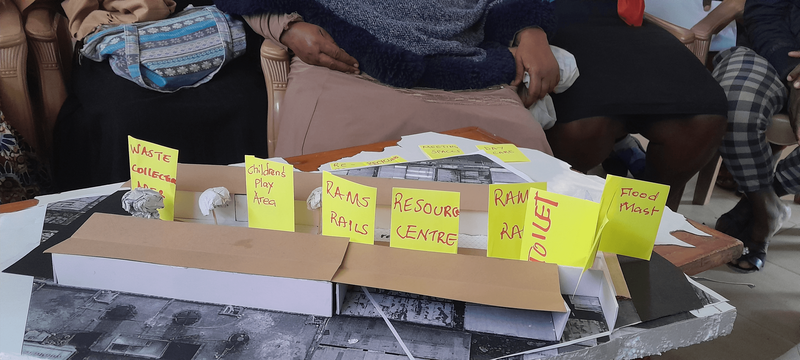
Kayole Soweto workshop design activity, 2023.
UFI follows a collaborative, multi-stage process rooted in local leadership and cross-sector partnership.
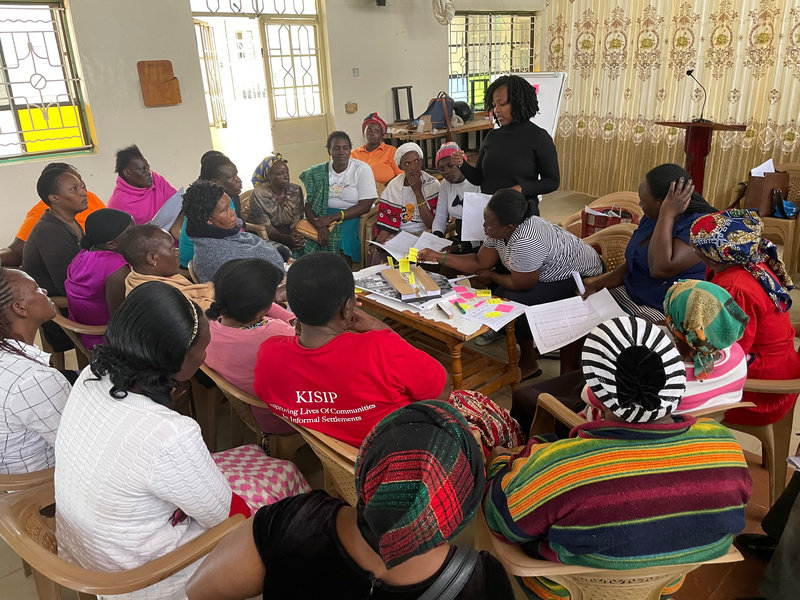
Kayole Soweto community design workshop, 2023.
The initiative begins by mobilising local networks and forming neighbourhood advisory groups, which guide participatory research and mapping to identify key needs. A public Call for Initiatives then invites residents to propose projects based on their priorities and lived experience. Selected projects move into co-design, where residents, technical experts, and government partners work together to develop, refine, and implement context-specific improvements.
To sustain these spaces long-term, UFI establishes novel shared management models between communities and government. A tripartite Memorandum of Understanding (MoU) defines roles and commitments across the project’s lifespan for the NCCG, CBOs, and the implementing partners (KDI, SDI, and AMT). A key innovation is the creation of a Service Level Agreement (SLA) that formalises how communities and the County jointly manage facilities after construction. This simple but transformative tool provides a clear, replicable framework to ensure that public spaces remain safe, inclusive, and well maintained over time.
solution
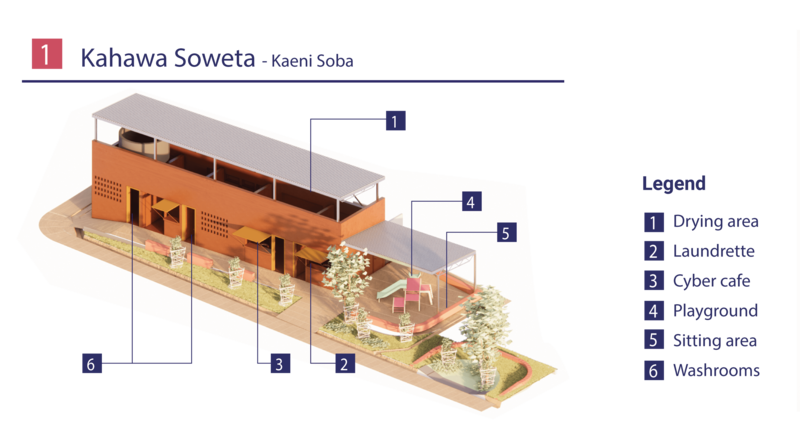
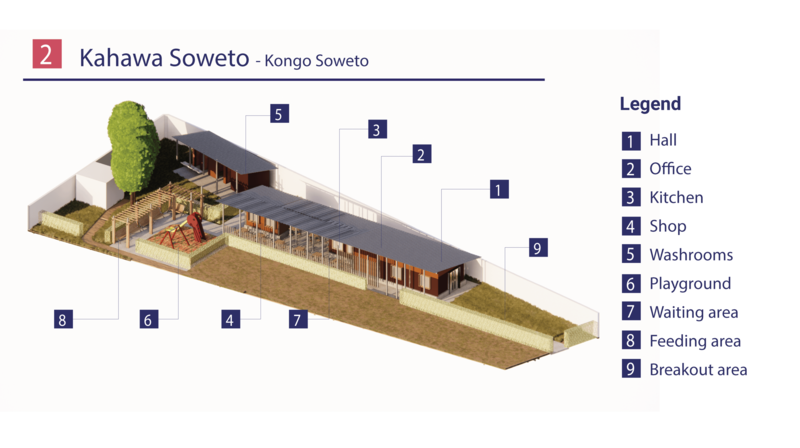
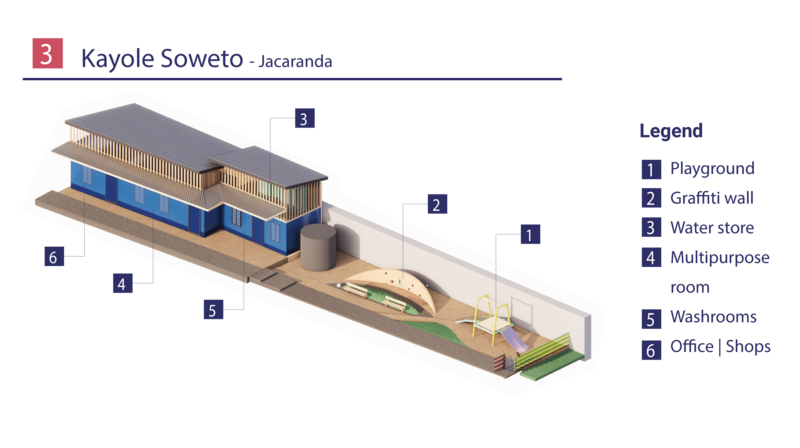
Led by communities, UFI delivers small-scale, high-impact interventions, such as playgrounds, green and shaded gathering spaces, paths and asses, freshwater and stormwater infrastructure, and public toilets, each co-designed with the community from concept to completion. Projects are tailored to address real, everyday challenges while promoting climate resilience, gender inclusion, and disaster preparedness. Every space is designed not only as an amenity, but as a catalyst for long-term social, economic, and environmental benefit.
impact
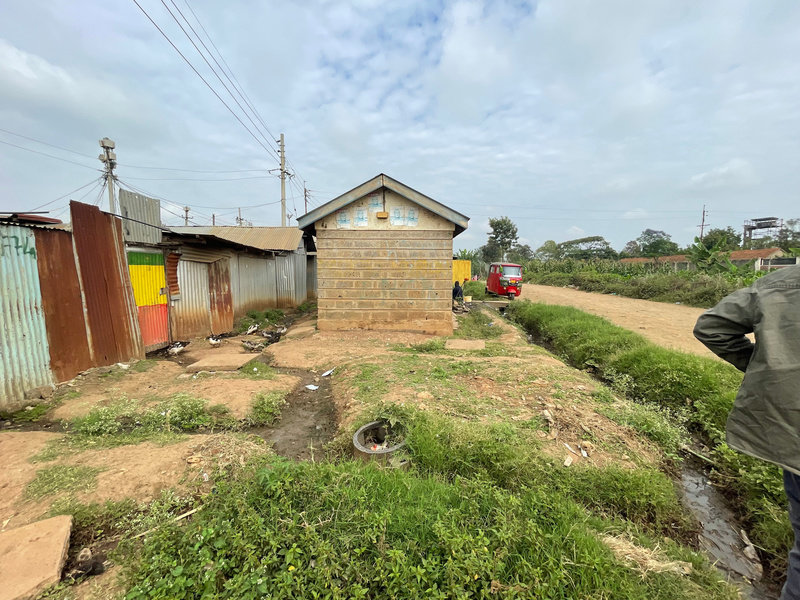
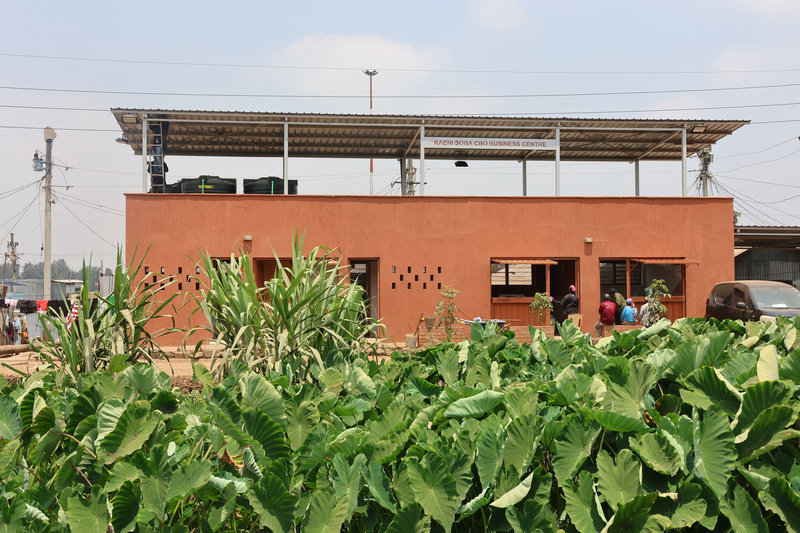
Kaeni Soba Business Centre site before.Kaeni Soba Business Centre after (Design 1).
UFI strengthens collective governance, builds community capacity, and helps embed local knowledge into policy and practice. By the end of 2025, the Urban Fabric Initiative (UFI) had directly engaged over 1,500 residents from three informal settlements in Nairobi through participatory design and construction activities. Beyond those directly involved, an estimated 26,000 community members in the three informal settlements are benefiting indirectly from enhanced public spaces, improved safety, and better access to services.
By bridging the gap between grassroots innovation and formal upgrading programs, UFI is helping to shape a more inclusive, connected, and liveable Nairobi; one where residents are active partners in creating and managing future neighborhoods.
partners
UFI Nairobi is led by Kounkuey Design Initiative (KDI) in partnership with:
Kaeni Soba CBO, Kahawa Soweto
Kongo Soweto CBO, Kahawa Soweto
Soweto Jacaranda Welfare Group CBO, Kayole Soweto
Faulu Self-Help Group CBO, City Carton
Alexin CBO, City Carton
Akiba Mashinani Trust (AMT)
Slum Dwellers International (SDI)
Nairobi City County Government (NCCG): Health, Wellness & Nutrition Sector (formerly Department of Health Services); Talents, Skills Development & Care Sector (formerly Department of Social Services, Sports, Culture and Recreation); Department of Partnerships, Stakeholder Engagement and Communication
Kenya Informal Settlement Improvement Program Phase 2 (KISIP 2)